Post-Race Injury Plan for Runners: What to Do in the First 14 Days
Make Your First 14 Days Count After Race Day
You crossed the finish line, grabbed some water, and felt that mix of pride and exhaustion. Now a day or two has passed and you are feeling something that is more than the normal “I raced hard” soreness. Maybe it is a sharp twinge in your knee, a hot spot in your shin, or a cranky Achilles every time you take a step.
Those first 14 days after a race or the end of a track or road season matter a lot. This short window often decides if a small issue settles down or grows into the injury that wipes out your fall marathon, cross-country season, or your chance to stay game-ready for soccer or flag football.
We want to help you tell the difference between soreness and a real injury, use clear “pain rules” to guide your choices, know when to see a physical therapist for runners, and keep your fitness with smart cross-training. At Rebound Physical Therapy in Newington, CT, we work one-on-one with runners and running-based athletes who want to get back to their sport, not just “rest on the couch.”
Day 0, 3: Sort Out Soreness vs. Injury
Right after a race, most runners feel tired but not too bad. Then the next day or the day after, things really hit. That is delayed onset muscle soreness, or DOMS.
Normal post-race soreness often:
- Starts 24 to 48 hours after your race
- Feels global and even on both sides, like stiff quads, calves, and glutes
- Eases up when you move a bit and peaks for a day or two before fading
With DOMS, it is usually okay to:
- Take short walks
- Do gentle mobility work
- Spin lightly on a bike
Total bedrest often makes you feel more stiff, not less.
What should make you pause are red flags that act differently than DOMS. These include:
- Sharp or catching pain with every step, especially in one spot
- A clear limp that does not improve as you warm up
- Night pain that wakes you up or keeps you from falling asleep
- Noticeable swelling in one joint or area
- A very specific “hot spot” along your shin, foot, or hip bone
Bone stress injuries, like early stress fractures, often feel sharp or deep on the bone and get worse the more you run. Soft tissue strains or tendon pain may feel more like pulling, tightness, or pain at the start and end of a run.
In the first 72 hours, smart moves include:
- Relative rest, not a full shutdown: cut your volume and intensity way back
- Elevation and compression if you see swelling
- Short bouts of ice only if it helps your pain feel calmer
Follow basic pain rules: mild pain in the 0 to 3 out of 10 range that settles back to normal within 24 hours is usually okay. If pain spikes above that or keeps climbing as you move, shut that activity down for the day.
Day 4, 7: Pain Rules to Guide Your Training Decisions
By day four, most simple soreness is heading in the right direction. This is when clear pain rules help you decide if and how you can keep running.
Think of a simple 0 to 10 scale:
- 0: no pain at all
- 1, 3: mild discomfort, like normal soreness on an easy shakeout
- 4, 5: moderate pain that changes how you move or makes you “protect” a limb
- 6+: strong pain, often sharp, that you want to stop right away
We like a “2, 3 point rule.” If you start a run at a 1 out of 10, your pain should not climb above a 3 or 4. By the next day, it should be back near that starting point. If pain jumps by more than 2 to 3 points or lingers beyond 24 hours, that run was too much.
Think of your pain as a traffic light:
Green light:
- Pain 0, 3 out of 10
- Feels like normal stiffness and improves as you move
- Gone or clearly better the next morning
With green light pain, easy running and cross-training are usually fine.
Yellow light:
- Pain 4, 5 out of 10
- Localized, with or without mild swelling
- Feels unstable, like a joint might give way
Here, it is smart to:
- Cut mileage
- Pull out speed work and hills
- Consider getting a physical therapy evaluation for runners
Red light:
- Pain above 6 out of 10
- Sharp, stabbing, or bone-like pain
- Limping, visible swelling, or bruising
With red light pain, avoid impact until you have been evaluated.
In this week, adjust your plan instead of forcing it. Swap a tempo run for easy spinning, skip hills, and be extra careful if you raced in heat or humidity, which can increase cramps, tightness, and tendon irritation.
When to See a Sports Physical Therapist
Many runners try to “wait it out” for too long. Clear timelines help.
It is time for a running-focused physical therapy assessment if:
- Your pain has not improved after 5 to 7 days of cutting back
- Your pain keeps coming back every time you try to run
- You feel stuck in that yellow light zone, afraid to push but not getting better
You should get an evaluation right away if:
- You felt or heard a pop or snap at the race or finish
- You cannot walk without limping for more than 48 hours
- Swelling and bruising showed up quickly after you felt pain
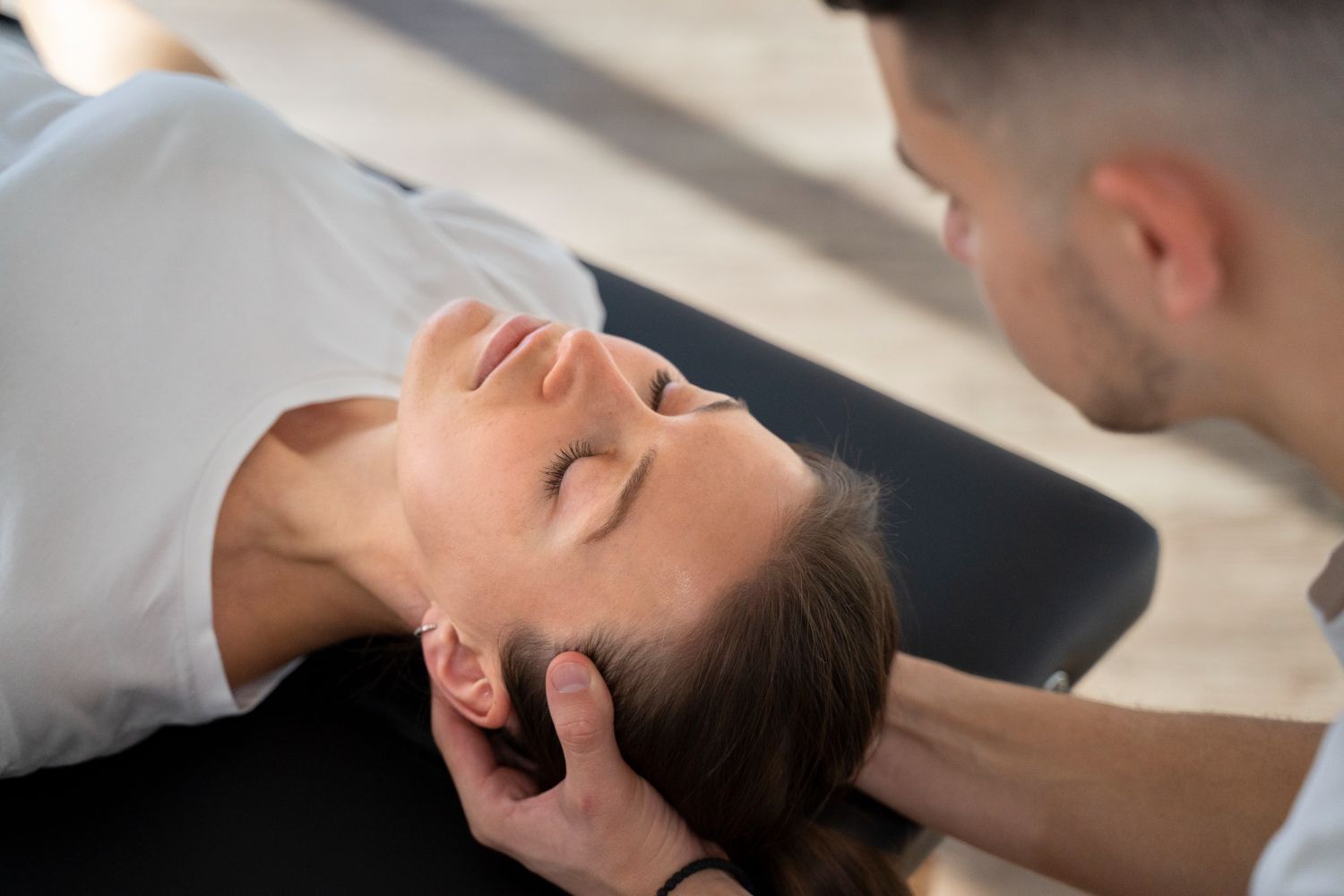
At a clinic like Rebound Physical Therapy, a running-specific visit often includes:
- Gait analysis to see how you move when you run
- Strength testing of hips, core, and calves
- Mobility checks for your ankles, hips, and big toe
- Sport-specific testing for road racing, track, cross-country, triathlon, or field sports
Early PT can shorten your time off. Catching hip weakness, poor single-leg control, or stiff ankles before they cause a bigger injury can keep a mild tendon issue from turning into a full stress injury. Performance-focused physical therapy for runners aims not only to calm your pain, but also to build a stronger base for your next training block.
Smart Cross-Training While You Heal
If you need to back off running, you do not have to give up your fitness. You just need the right plan.
Good low-impact options include:
- Cycling or spin bike
- Pool running or swimming
- Elliptical
- Rower or SkiErg
Match the type and intensity to your event and pain. A marathoner might do longer, steady rides or pool runs. A 5K or track athlete might use shorter, interval-style sessions. Pain rules still apply: if your pain climbs or flares up the next day, that cross-training session was too hard.
A simple way to think about volume: try to match your usual weekly cardio minutes with low- or no-impact work, but only as long as your pain stays in the green zone. One or two harder cross-training days per week is usually plenty. The rest should feel easy, just like a smart run program.
Strength work can speed your return if chosen well. Key patterns for runners are:
- Single-leg squats or step-downs
- Hip hinge moves like deadlifts or bridges
- Calf and soleus strengthening
- Trunk and hip stability
A good rehab plan will change these to fit your specific issue, whether that is knee, Achilles, plantar fascia, hip, or low back pain, and also match the demands of your sport, from miler to trail ultrarunner to soccer winger.
Day 8, 14: Build a Safe Return-to-Run Plan
If pain has settled down by the second week, it might be time to test some gentle running. Start small with walk, jog intervals on a flat, predictable surface.
For example:
- Warm up by walking 5 to 10 minutes
- Jog 1 to 2 minutes, then walk 2 to 3 minutes
- Repeat several times if pain stays 3 out of 10 or less
Use the same pain rules: during the run, pain should stay at or below a 3. The next day, you should not feel worse than before that run.
Progress with simple rules:
- Increase either total time or intensity, but not both at once
- Keep hills and speed out of your plan during this early window
- Run every other day at first, not back-to-back days
If pain leaves the green zone, you do not have to quit. Instead, step back your volume, lean more on cross-training, and get guidance from a physical therapist who works with runners.
Those first 14 days fit into your longer goals. Smart choices now can protect your fall marathon, your cross-country season, or your ability to stay fast and agile for rec league games that depend on your running base. At Rebound Physical Therapy, we care about keeping you on the road, track, and field with a body that can handle the work your sport asks from it.
Get Back To Stronger, Smarter Running Today
If pain or recurring injuries are keeping you from the miles you love, we are here to help you run with confidence again. Our specialists use targeted
physical therapy for runners to address the root causes of your symptoms and improve performance. Reach out to Rebound Physical Therapy so we can assess your stride, build a personalized plan, and guide your return to training. Have questions about getting started, or ready to schedule an appointment now,
contact us today.
Recent Blog Post