
Not All Box Jumps Are the Same
Watching the CrossFit Open always fires people up. Seeing athletes like Colten Mertens fly through workout reminds everyone what’s possible when movement, strength, and conditioning line up perfectly.
This year’s Open starting with CrossFit Open 26.1, brought something familiar back into the spotlight: the box jump.
It looks simple.
Jump on a box. Step down. Repeat.
But here’s what most people don’t realize:
There are two very different kinds of box jumps — and they train two very different things.
We see the confusion around this every week in the clinic, and actually spoke with a few different athletes about this very thing recently. Buckle up and let's dive in.
Efficient Box Jumps vs. Box Jumps for power
In CrossFit workouts, box jumps are usually there to test your engine. You’re trying to get through reps efficiently. That means shorter dips, quicker repetitions, and just enough jump to clear the box. The goal isn’t to jump higher, it’s to maintain your performance the workout.
That’s totally fine, as long as you understand what you’re training.
Box jumps to improve power output are different. These are meant to build explosiveness. You start from a still position, load intentionally, and jump as high and fast as possible. Full effort. Full rest. The goal isn’t speed — it’s output.
Same movement. Totally different intent.
And that difference shows up clearly when we look at the data.
What the Force Plates Show Us
At Rebound, we use Hawkin Dynamics force plates to measure how athletes produce and absorb force when they jump.
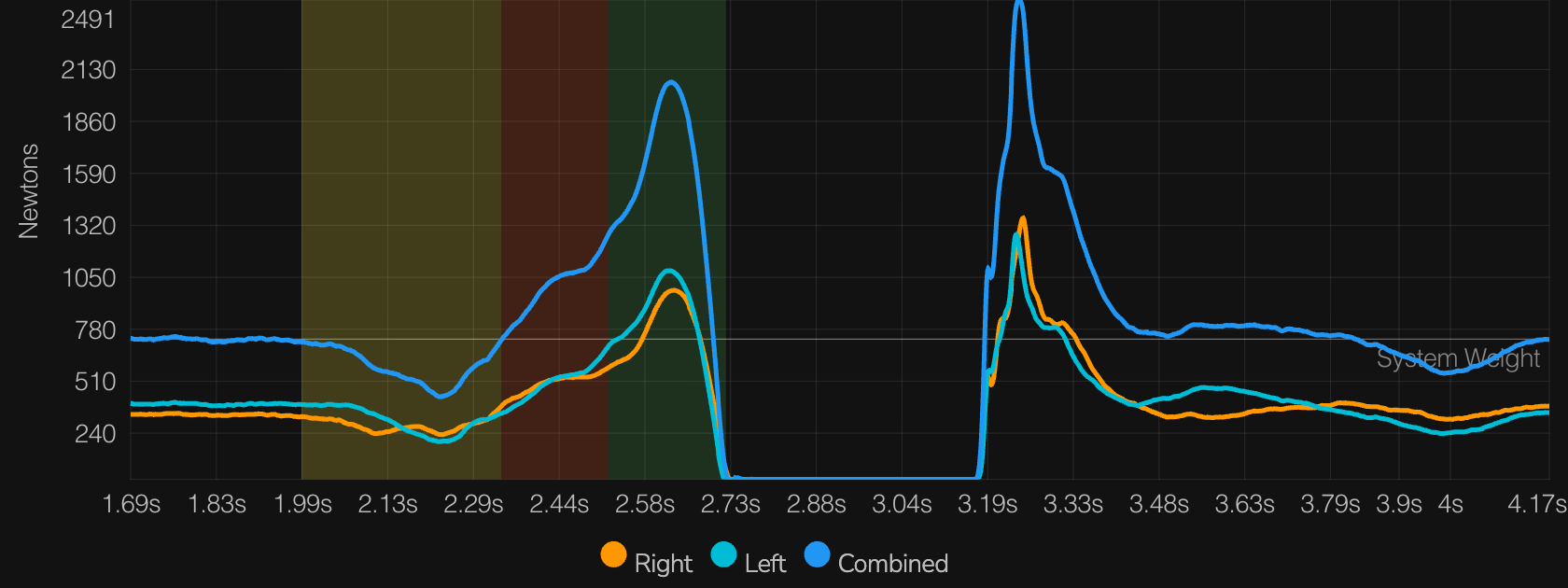
When someone performs a conditioning-style box jump, we usually see:
- Lower peak force
- Longer time spent on the ground
- A flatter force-time curve
The body is managing fatigue, not expressing power.
Hover over the picture to see peak displacement.

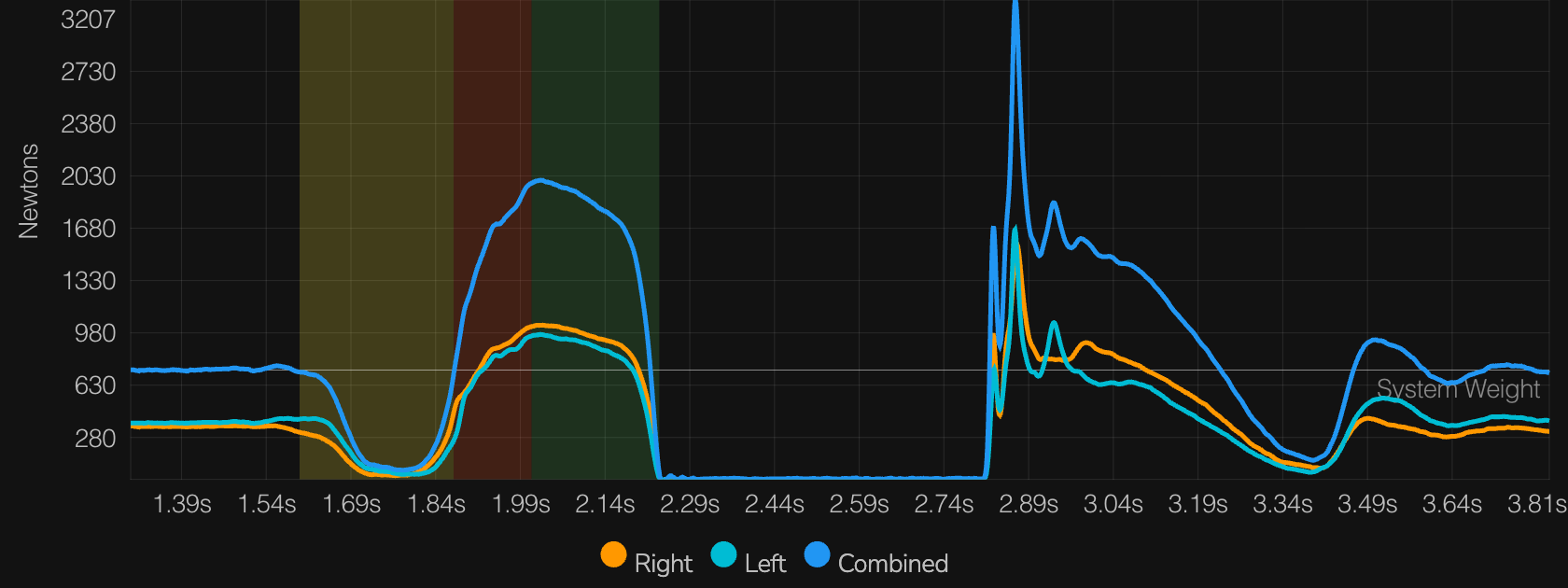
When jumping for power development, the graphs look very different:
- Higher peak force
- Faster force production
- A sharp, steep force-time curve
The nervous system is firing fast and hard.
Neither are “bad”, they just serve different purposes.
The problem is when people think they’re training power, but they’re really just practicing conditioning.

Why This Matters for Injuries
A lot of the athletes we see aren’t hurt because box jumps are dangerous.
They’re hurt because:
- They’re fatigued
- They’re rebounding quickly off the box
- They’re loading tissues that never fully recovered
- They think they’re building explosiveness when they’re actually accumulating stress
That’s when knees start barking, Achilles tendons get cranky and when patients say things like, “Box jumps always mess me up.”
The Big Takeaway
There's no "wrong way" to do a box jump. Intention must meet the goal. If the goal is improving your conditioning and capacity, you can use the box jump as a tool. If the goal is improving power and explosiveness, the box can also be a tool. The intention is what drives change.
Elite athletes know this. Their training separates power from conditioning on purpose. Their workouts look flashy, but their preparation is precise. Most recreational athletes blur that line without realizing it, and that’s where physical therapy and performance coaching fit in.
We help athletes:
- Understand what their movement is actually training
- See how they produce and absorb force
- Choose the right tool for the right phase of training
Not so they can avoid hard workouts, but so they can keep doing them longer.
Want to See How You Jump?
Most people have no idea which type of jump they’re actually doing until we measure it.
If you’ve ever wondered:
- “Am I actually explosive?”
- “Why do jumps bother me?”
- “Am I training power or just surviving reps?”
We can show you.
👉 Book a jump assessment with us and see what your force-time curve says about your training.
Recent Blog Post